Product design & engineering · Progressive web app

Most money apps tell you what you spent.

Fluxa tells you what you can spend.

Enter what you expect to earn this month. Before the month starts, that income is divided across every category you keep — rent and commitments protected, the things you said matter least trimmed first.

August · expected income

2.300 €

Allocated to the last euro

The plan

A month begins with a decision, not a receipt.

Every tracker can add up the past. The harder question is the one you face on the first of the month: given what is coming in, what is each part of your life actually allowed to cost? Fluxa answers that first, then holds you to it.

  • Every category carries a priority, a floor and a fixed-or-flexible nature.
  • Edit any amount by hand and it locks — recalculating never overwrites your call.
  • The allocation always balances to the euro against the income you entered.
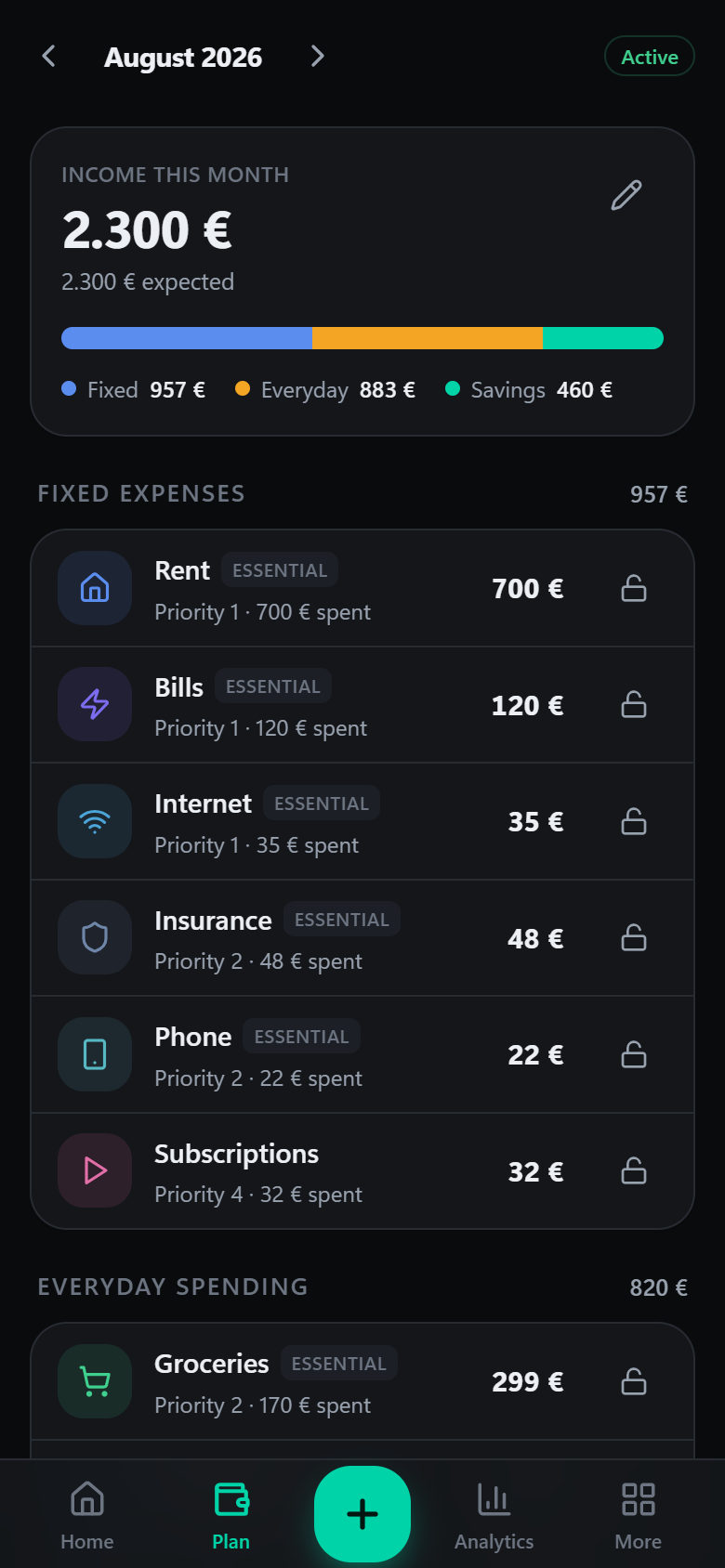
The monthly plan screen showing income split across fixed expense categories
Monthly planner

The engine

What happens when the money is short.

Income is funded in waves. Each wave is filled before the next one sees a cent, and within a wave the floors are covered first. A category is only ever cut after everything below it has already been cut to the bone.

  1. WAVE 1 Fixed essentials Rent, energy, the connection you work over.
  2. WAVE 2 Commitments Insurance and contracts already signed.
  3. WAVE 3 Savings & goals Paid like a bill, before discretionary spending.
  4. WAVE 4 Essential flexible Groceries and getting around — compressible, not optional.
  5. WAVE 5 Lifestyle Shopping, going out, the first to absorb a shortfall.
  6. WAVE 6 Buffer Whatever survives, kept unassigned on purpose.
Category allocations when monthly income drops from 2.300 euro to 1.900 euro
Category 2.300 € 1.900 € Outcome
Rent 700 700 untouched
Insurance 48 48 untouched
Emergency fund 150 150 untouched
Groceries 299 247 −17%
Eating out 149 123 −17%
Shopping 126 36 −71%
Entertainment 82 12 −85%

Real output from the planner, not an illustration: 400 € less income, and the fixed commitments do not move while lifestyle absorbs the loss. Both plans still balance exactly to the income they were given. When income runs the other way, the surplus is offered back as a split you can accept or edit.

Day to day

One number worth checking before you order.

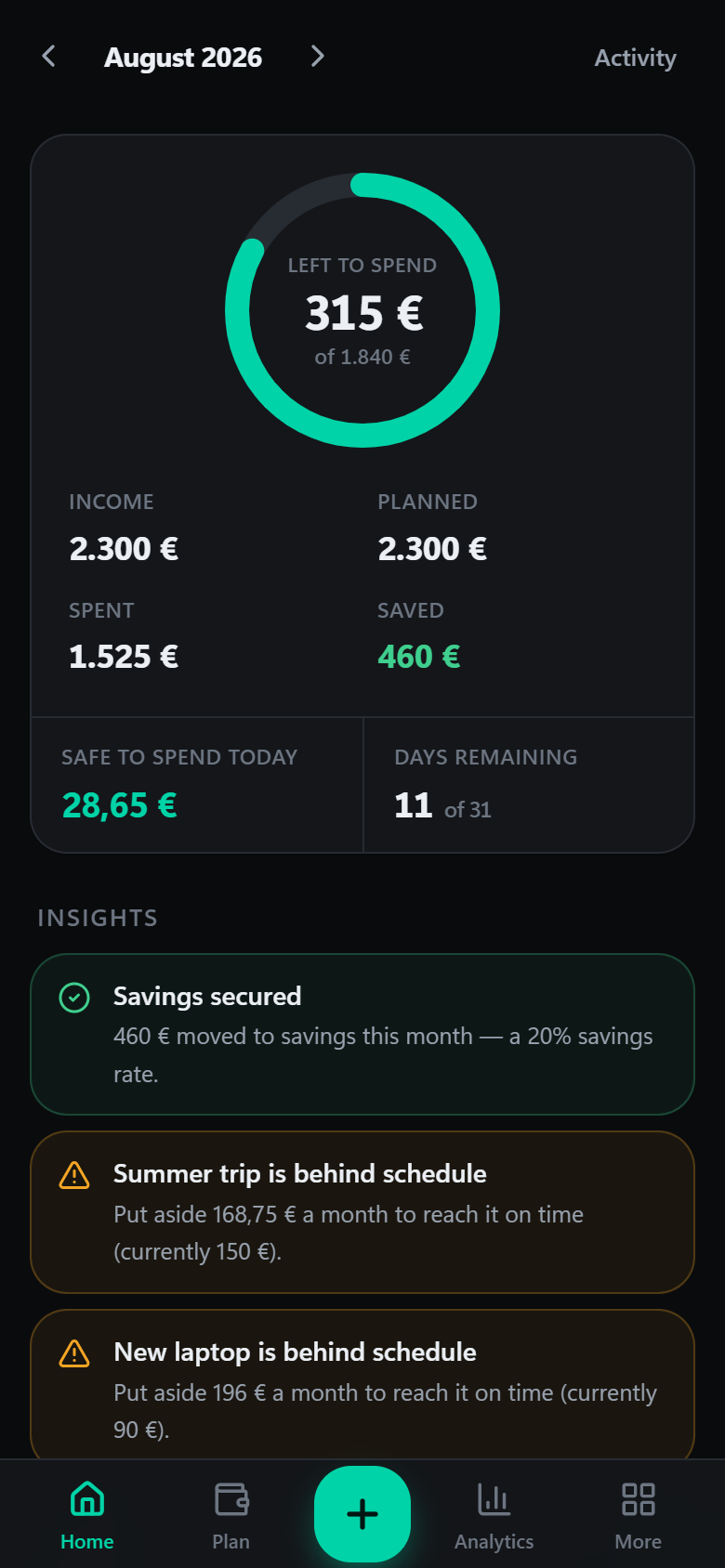
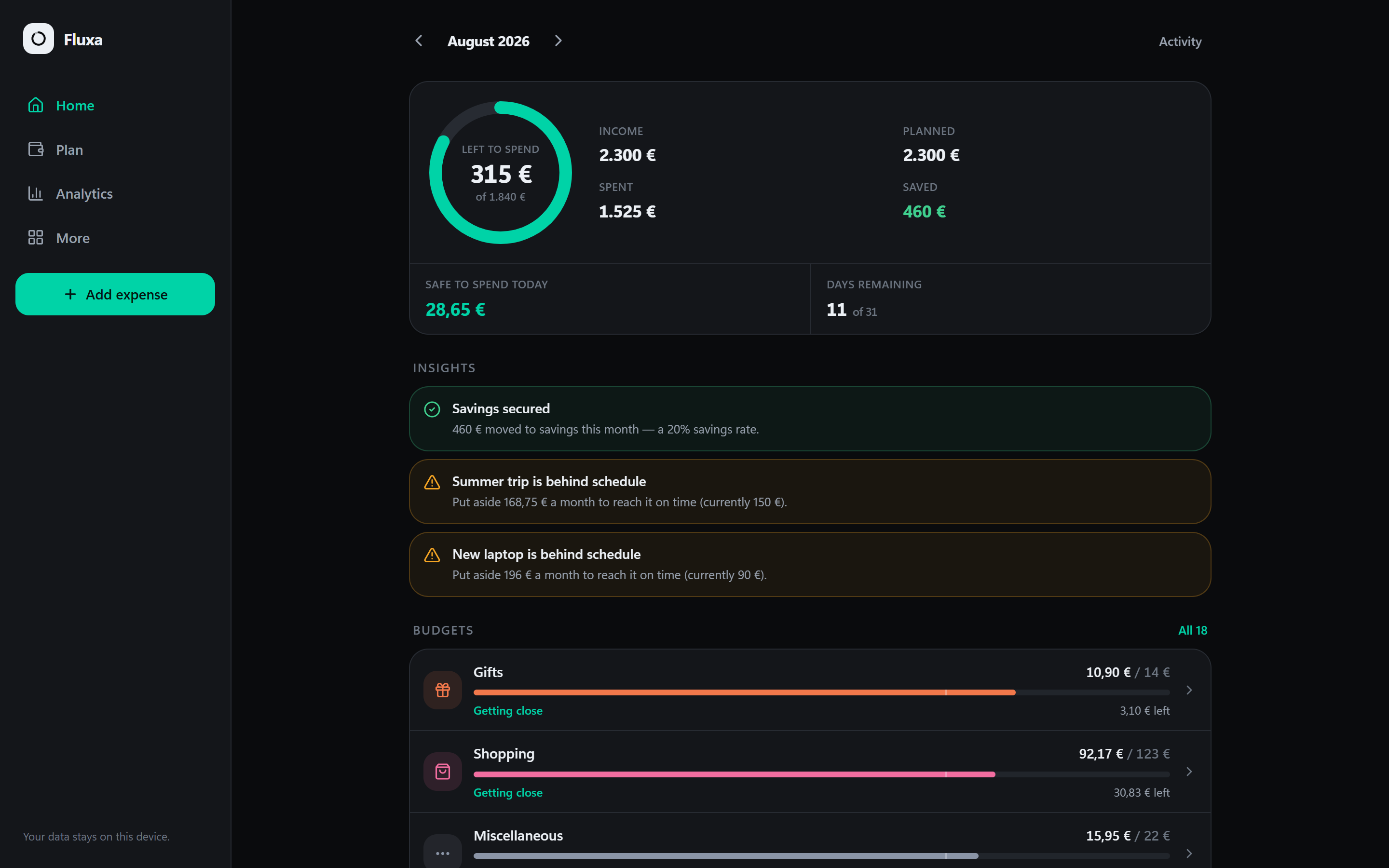
The dashboard leads with what is left and what today can carry — remaining flexible money divided by the days still to come. Underneath, each category tracks its own pace against how much of the month has passed.

  • Safe-to-spend-today, recalculated with every transaction.
  • Pace warnings when a category is burning faster than the calendar.
  • Projected month-end totals while there is still time to change them.
Dashboard showing money left to spend, safe-to-spend today, and insight cards
Dashboard

Throughout

Built to be opened every day, not admired once.

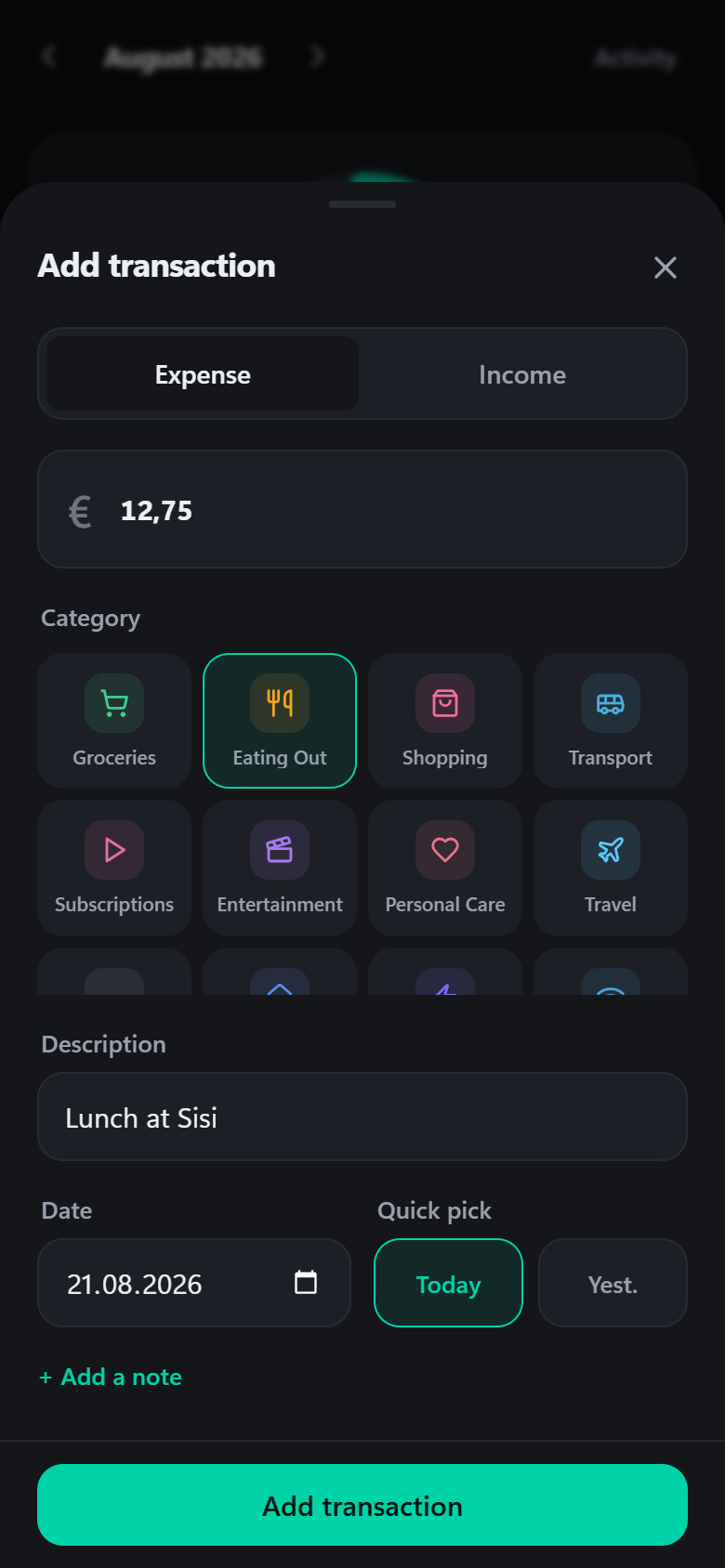
Quick add sheet with amount, category grid and description

Logging takes seconds

Amount, category, done. The sheet opens from the centre of the navigation bar and remembers the category you reached for last.

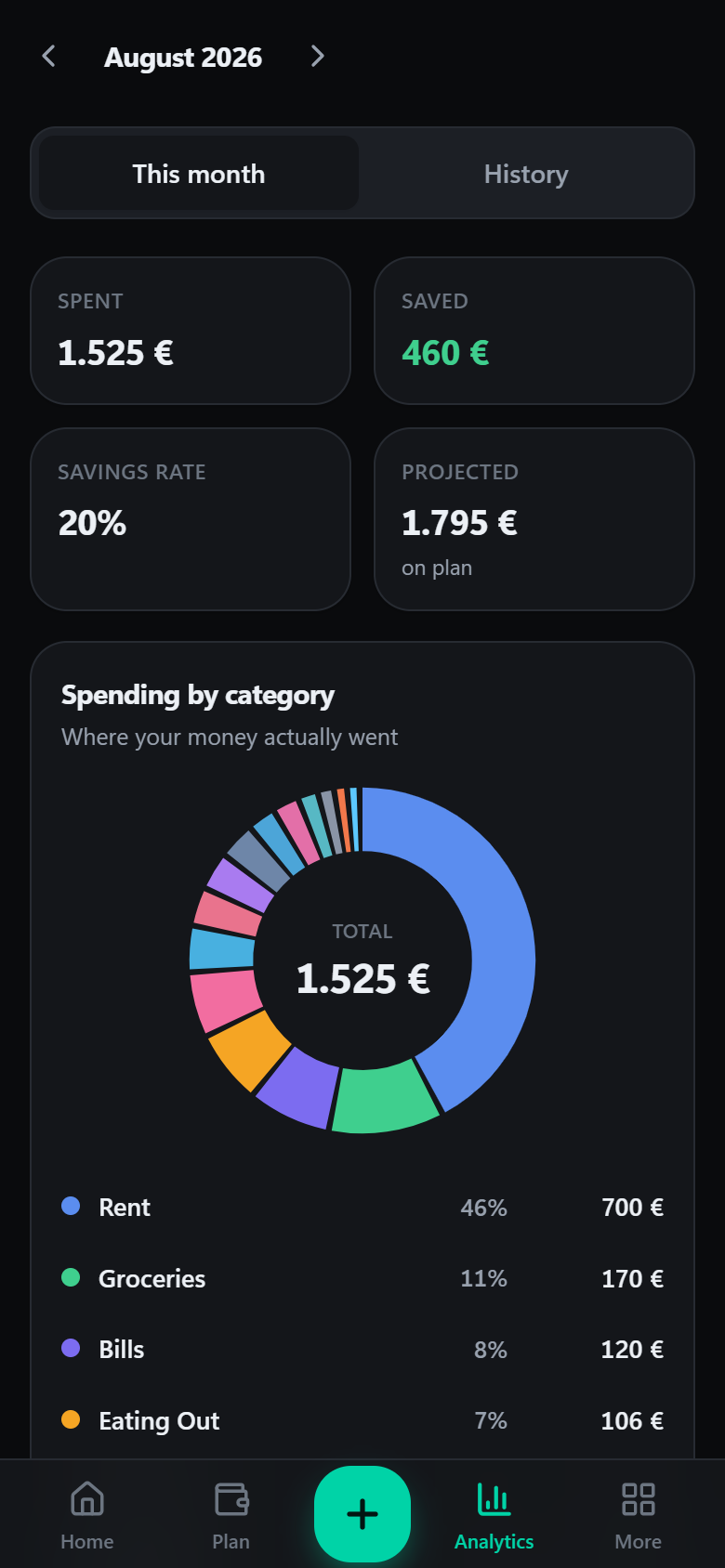
Analytics screen with spending donut chart and category breakdown

Where it actually went

Category breakdowns, spending over time, planned against actual, and month-over-month history once a few months exist.

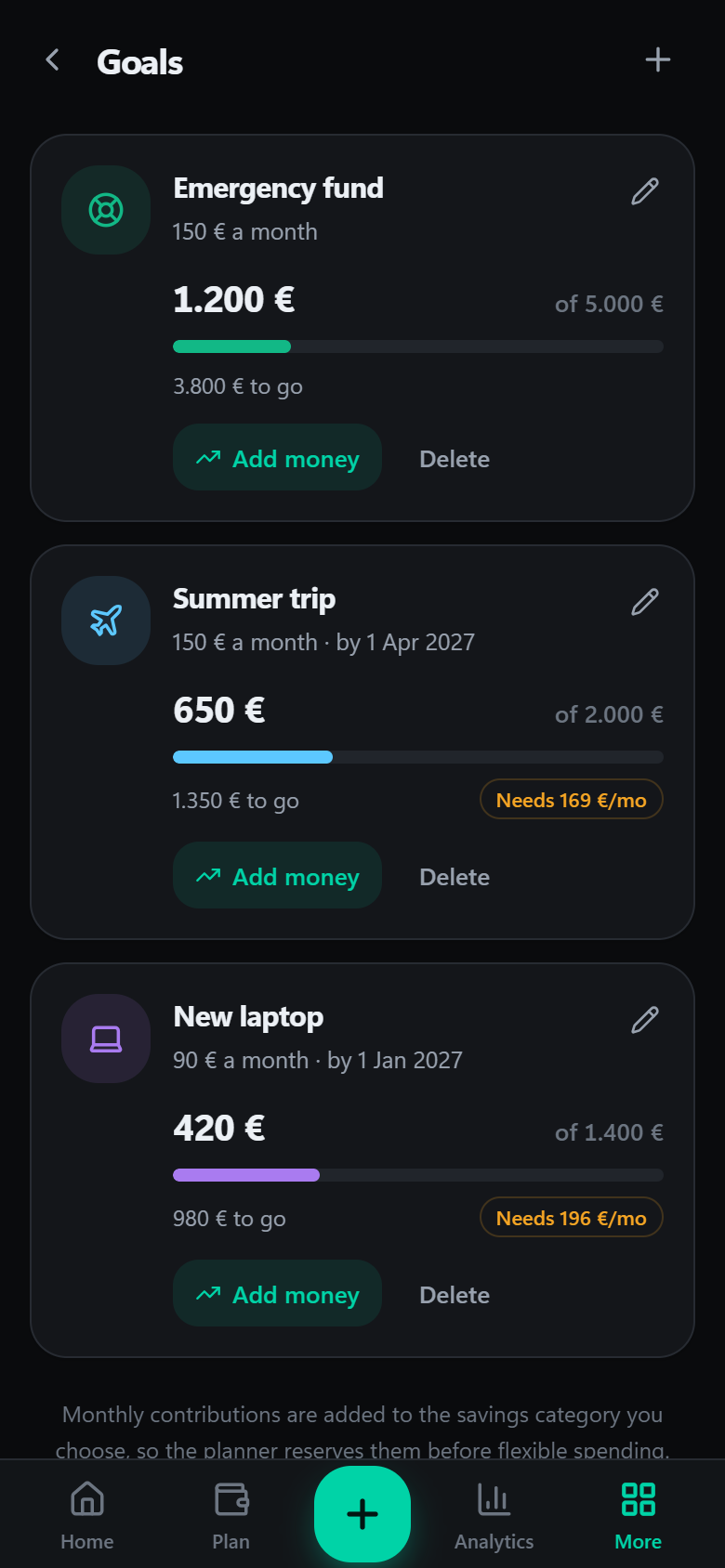
Goals screen showing progress toward an emergency fund and a trip

Goals that reserve money

A goal's monthly contribution is budgeted like a bill, and the app says plainly when the pace will not reach the target date.

Under it

A product, not a prototype.

Financial data is the kind you cannot lose or quietly corrupt. The architecture reflects that: everything is local-first, every calculation is guarded, and nothing ships unless the engine checks pass.

The same app running as a wide desktop layout with a sidebar
Same codebase, desktop layout